
General
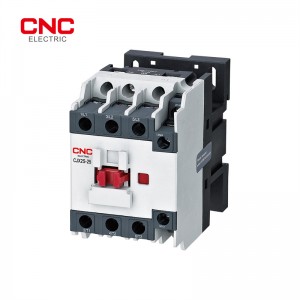
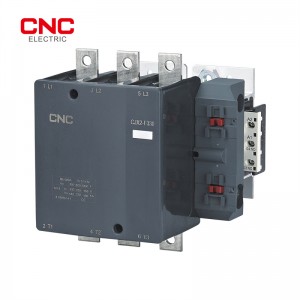
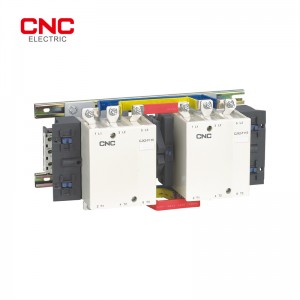
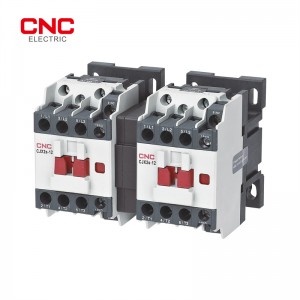
CJX2-D series AC Contactor is suitable for using in the circuits of rated voltage up to660V AC 50Hz or 60Hz,rated current up to 95A,for making,breaking,frequentlystarting &controlling the AC motor.Combined with the auxiliary contact block,timer delay &machine-interlocking device etc,it becomes the delay contactor,mechanical interlocking contactor,star-delta starter.With the thermal relay,it iscombined into the electromagnetic starter.
Standard:IEC 60947-4-1.
Product Overview
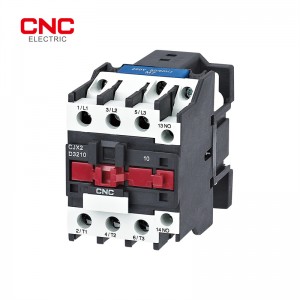
CJX2i series AC Contactorwith novel appearance and compact structure is suitablefor using starting &controling the AC motor frequently,switching on and off thecircuit at a long distance.It is used in combinationwith thermal relayto compose amagneticmotor starter
Standard IEC 60947-1,IEC 60947-4-1.
CJX2s-M AC Contactor is used for frequent starting, stopping, and remote control of AC motors. It supports 9A–95A rated operating current and 220V–690V rated operating voltage, making it suitable for motor control, HVAC systems, pumps, fans, compressors, machinery, and industrial control panels.
It can be combined with a thermal overload relay to form a magnetic motor starter. With DIN rail or screw installation, auxiliary contact compatibility, and a compact 3-pole design, CJX2s-M provides reliable switching performance for low-voltage control systems.
CJX2s series AC Contactor with novel appearance and compact structure is suitablefor using starting &controlling the AC motor frequently,switching on and off thecircuitat a long distance.It is used in combinationwith thermal relay to compose amagneticmotor starter
StandardIEC60947-1,IEC 60947-4-1.
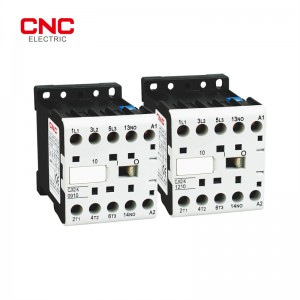
The YCC7 Series NO NC Contactor is a versatile, industrial-grade solution for motor control, designed to handle frequent starting/stopping of AC motors and remote circuit switching. Built to IEC 60947-1/4-1 standards, it combines robust performance with flexible customization, making it ideal for applications from small machinery to large-scale industrial systems. With rated currents from 6A to 630A and voltages up to 690V, the YCC7 series supports diverse setups—from 3P/4P configurations to auxiliary contact expansions for advanced control.
General
YCX2s series AC Contactor with novel appearance and compact structure is suitable for
using starting & controlling the AC motor frequently, switching on and off the circuit at a long distance. It is used in combination with thermal relay to compose a magnetic motor starter.
Standard: lEC 60947-1, IEC 60947-4-1.
CKJ5 series vacuum AC contactors (hereinafter referred to as contactors) are mainly used in circuits with AC 50Hz,rated working voltage up to 1140V, and rated working current up to 630A. They are used for long distance connection and disconnection of circuits, and can be combined with appropriate thermal overload relays or electronic protectors to form vacuum electromagnetic starters. They are particularly suitable for forming isolated vacuum electromagnetic starters.
CNC Electric supplies a comprehensive range of AC contactors for motor starting, remote circuit switching, industrial automation, HVAC equipment, power distribution, and other electrical control applications. The available range includes compact motor contactors, 3-pole and 4-pole contactors, air-conditioning contactors, mechanically interlocked contactors, high-current contactors, capacitor switching contactors, DC-operated contactors, and vacuum contactors.
Depending on the series and utilization category, CNC contactors cover operating currents from compact control applications up to 1250 A, with models available for circuits up to 1140 V. Selected contactors can be combined with thermal overload relays and auxiliary devices to build magnetic starters, reversing starters, star-delta starters, and other motor control solutions.
| Contactor Type | Main Function | Typical Applications | Example Series |
|---|---|---|---|
| General-Purpose AC Contactor | Frequent remote switching and control of AC circuits and motors | Pumps, fans, compressors, conveyors, machine tools and control panels | YCC7, CJX2s-M, CJX2s, CJX2i, CJX2, YCX2s and YCC6 |
| 3-Pole and 4-Pole Contactor | Switches three-phase circuits or circuits requiring an additional switched pole | Motor control, heating, lighting and power distribution | YCC7 3P and YCC7 4P |
| HVAC Contactor | Controls compressors, condenser fans and other HVAC loads | Residential, commercial and central air-conditioning systems | YCK |
| High-Current Contactor | Controls high-power loads and large industrial circuits | Large motors, industrial machinery and power distribution equipment | CJX2-F, CJX2s-F and CJ40 |
| Mechanical Interlocking Contactor | Prevents two contactors from closing at the same time | Forward/reverse motor control and interlocked switching circuits | CJX2s-N and CJX2-F-N |
| Capacitor Switching Contactor | Switches capacitor banks while limiting making inrush current | Low-voltage reactive power compensation systems | CJ19s |
| Vacuum AC Contactor | Uses vacuum switching technology for demanding operating conditions | Mining, industrial equipment and higher-voltage motor control | CKJ5 |
| DC-Operated Contactor | Provides switching and control for applications requiring DC operation | Industrial control circuits and DC motor control systems | CJX2-Z |
Frequent starting, stopping and remote operation of pumps, fans, compressors, conveyors and other AC motors.
Switching power circuits through PLCs, control relays, push buttons and automated control systems.
Control of compressors, condenser fans, blowers and heating equipment in air-conditioning systems.
Combination with thermal overload relays to create direct-on-line, reversing and star-delta starters.
Remote switching of heating, lighting and other electrical loads in industrial and commercial installations.
Controlled switching of capacitor banks in low-voltage reactive power compensation panels.
| Selection Factor | What to Confirm | Why It Matters |
|---|---|---|
| Load Type | Motor, heater, lighting, capacitor bank or general power circuit | Different loads produce different switching and inrush current conditions. |
| Utilization Category | AC-1, AC-3, AC-4 or another applicable category | The same contactor may have different current ratings under different categories. |
| Operating Voltage and Current | Rated operational voltage, motor power and full-load current | The contactor must carry and switch the actual load under defined conditions. |
| Coil Voltage | AC or DC coil and exact control voltage | An incorrect coil specification may cause failure to close, overheating or coil damage. |
| Number of Poles | 3-pole, 4-pole or another required configuration | A standard three-phase motor normally uses 3 poles, while some circuits require an additional switched pole. |
| Auxiliary Contacts | Required normally open and normally closed contacts | Auxiliary contacts support self-holding, interlocking, indication and PLC feedback. |
| Switching Duty | Starts per hour, reversing, jogging and expected operating cycles | Frequent or severe switching can significantly reduce electrical life. |
| Installation Conditions | Temperature, altitude, ventilation, mounting method and enclosure conditions | Environmental conditions may require derating or a different contactor size. |
| Category | Typical Load | Common Use |
|---|---|---|
| AC-1 | Non-inductive or slightly inductive loads | Resistive heating and general distribution loads |
| AC-3 | Squirrel-cage motors | Standard starting and stopping of pumps, fans, compressors and conveyors |
| AC-4 | Squirrel-cage motors under severe switching duty | Jogging, inching, plugging and frequent reversing |
For most standard motor applications, the contactor should be selected according to its AC-3 rating at the actual motor voltage. The AC-1 current rating should not be used directly for an AC-3 motor load. Applications involving frequent reversing or jogging require the contactor’s AC-4 rating to be checked.
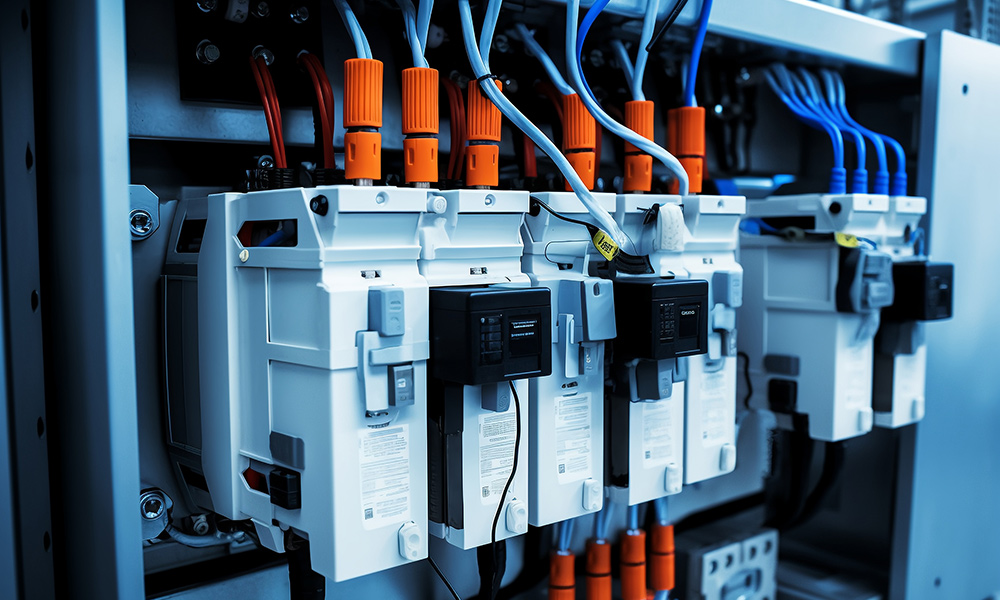
A contactor is a switching and control device; it does not independently provide complete short-circuit or overload protection. A typical motor control circuit may include:
The contactor, overload relay and upstream protective device should be selected using compatible ratings and coordination data. This helps improve operational reliability and limit equipment damage during a fault.
Solutions for standard motor control, HVAC systems, large industrial loads, capacitor switching and vacuum applications.
Multiple current ratings, coil voltages, pole arrangements and auxiliary contact options are available across the range.
Selected contactors can be combined with compatible thermal overload relays and accessories for complete motor starter solutions.
Need help selecting a contactor for your motor or industrial control system?
Contact Us for Detailed SpecificationsAn AC contactor is used to remotely connect and disconnect electrical loads. It is commonly applied to motors, pumps, compressors, fans, HVAC equipment, heaters, lighting circuits and industrial machinery.
Check the motor’s rated voltage, power, full-load current, starting method and operating duty. The contactor should meet both the AC-3 current rating and motor power rating at the actual supply voltage.
AC-1 is mainly used for non-inductive or slightly inductive loads, while AC-3 is used for starting and stopping squirrel-cage motors. An AC-1 current rating should not be used directly to select a motor contactor.
A 3-pole contactor is normally used to switch three-phase motors. A 4-pole contactor switches an additional conductor and may be required for heating, lighting, power distribution or circuits in which the neutral must also be switched.
No. A contactor mainly performs switching and remote control. A circuit breaker or fuse is required for short-circuit protection, while a compatible overload relay or motor protection device is normally used for overload protection.
A dedicated capacitor switching contactor is recommended. It is designed to manage the high inrush current produced when capacitor banks are energized and is better suited to power factor correction systems.